The development of a truly natural aquarium is not a matter of aesthetic preference; it is a fascinating convergence of fundamental ecological theories. You will stop fighting nature and start engineering it once you find the knowledge for that. This is a collection of works that have fundamentally shaped my journey in the hobby.
The Lake as a Microcosm
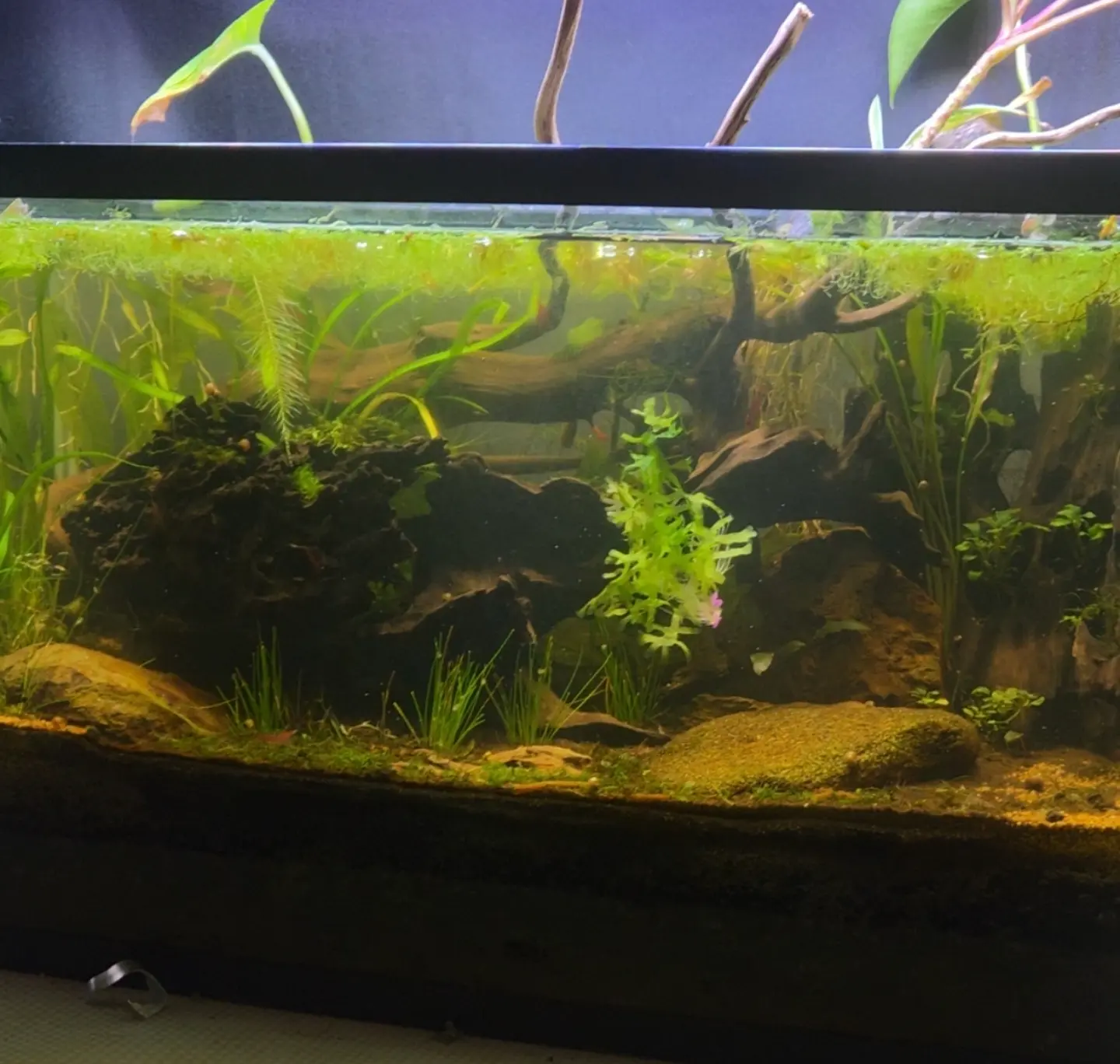
In 1887, Stephen Forbes published "The Lake as a Microcosm," arguing that a single body of water represents a "complete and independent equilibrium of organic life" — isolated yet internally connected. He observed that a disturbance to any single species "must speedily have its influence of some sort upon the whole assemblage."
This is the foundational truth of the Impossible Aquarium. A tank is not a random collection of fish and plants; it is a tightly coupled system where the biological availability of a single ion can dictate the stability of the entire food web. Forbes was writing about lakes. He was describing your tank.
"The Lake as a Microcosm"
The first ecological argument that a contained body of water is a self-regulating system — not a collection of independent organisms but a unified, interdependent equilibrium. The conceptual ancestor of every closed-loop aquarium methodology that followed.
Island Biogeography: Design as Destiny
Forbes's microcosm concept directly informs the application of Island Biogeography Theory (MacArthur & Wilson, 1967). An aquarium is an island; its small volume dictates that stability must come from efficient resource cycling and niche specialization, not infinite expansion.
In standard hobby practice, the "immigration rate" — adding fish and plants — often exceeds the system's capacity, leading to collapse. My approach is different. I view the aquarium not as a holding cell to be maintained, but as a closed loop that must evolve on its own terms.
- Pre-Determination: Before water touches glass, determine the carrying capacity of the island. Select species not just for visual harmony, but for functional connectivity.
- Evolution vs. Stasis: We do not want a static environment. We want a system that grows and matures — one that develops its own unique biological character over time.
- The Ion Effect: Because the island is small, even a minor change ripples through the system. The design must prioritize buffering capacity — biological and chemical — to absorb these shocks without intervention.
 The theoretical backbone: Forbes (1887), MacArthur & Wilson (1967), Odum (1969). Three landmark papers spanning 80 years of ecological science — all describing the same principles that govern a well-designed aquarium.
Odum and the "New Tank Syndrome" Myth
Eugene Odum's "The Strategy of Ecosystem Development" (1969) provides the roadmap for what hobbyists clumsily call "cycling." Odum defined ecological succession as an orderly process that culminates in a stabilized ecosystem where symbiotic functions are maximized.
This brings us to the frustration of New Tank Syndrome. Standard literature treats NTS as a disease — a toxic spike of ammonia that must be battled with chemicals and patience. This approach is fundamentally flawed. NTS is not a syndrome; it is the Pioneer Stage of succession.
The "hardy fish" method of cycling a tank is an artificial stress test. It floods the system with high-concentration waste, selecting for r-strategist bacteria that are not the organisms that sustain a mature, planted aquarium. You didn't cycle the tank — you selected for the wrong community entirely.
"NTS is not a syndrome. It is the Pioneer Stage of succession. You don't cure it with chemicals; you design past it."
Lindeman and the Detritus Engine
Perhaps the most critical — yet most ignored — concept in aquarium keeping comes from Raymond Lindeman's 1942 study, "The Trophic-Dynamic Aspect of Ecology." Lindeman revolutionized ecology by identifying detritus not as waste, but as a critical energy store that powers entire food webs from the bottom up.
In a "standard" aquarium, detritus is vacuumed away weekly. In a natural system, detritus supports the benthic microbial loop — the same loop that feeds microfauna, which feed shrimp, which fertilize plants, which shade algae. This aligns directly with findings in the SUBEX experiment, where the degradation of volcanic soil supported a far richer microfaunal community than chemically inert substrates. Mulm is not pollution. It is fuel.
Hutchinson and the Niche
G.E. Hutchinson's "Homage to Santa Rosalia" (1959) introduced the n-dimensional hypervolume niche — the theoretical framework explaining how diverse species coexist by partitioning resources across space and time. In an aquarium, we achieve this through stratification.
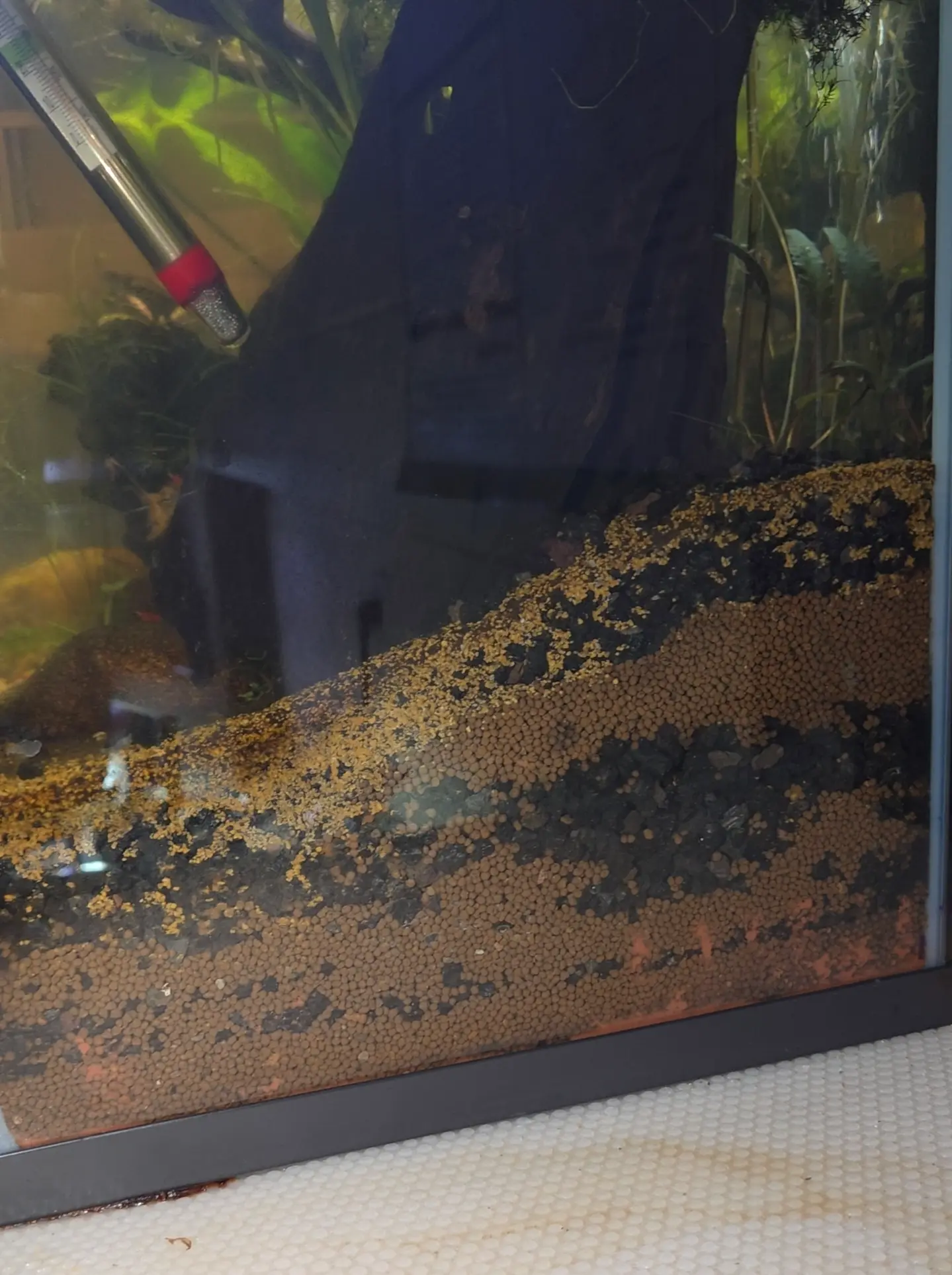
The Symbiotic Litho-Ecological Substrate System (SLESS) is the physical application of Hutchinson's theory. By creating distinct vertical layers — an anaerobic mineral bank, a facultative transition zone, and an aerobic benthic surface — we create physical space for diverse metabolic niches to coexist. Each layer hosts a different microbial community doing a different job. The system doesn't need managing because it manages itself.
SLESS: The Synthesis of Theory and Data
The SLESS methodology is the practical application of these five pillars. It resolves a critical paradox identified in substrate research:
- The Vegetative Driver: High Cation Exchange Capacity (CEC) substrates, like laterite clay, act as a nutrient battery — charging when nutrients are abundant, discharging when they're scarce.
- The Ecological Driver: Porous substrates, like volcanic ash and lava rock, create the physical micro-habitats required for a robust microfaunal food web to establish and self-sustain.
SLESS fuses these by integrating a high-CEC clay base with a porous volcanic structure, inoculated with microorganisms and fungi. This fungal network acts as the digestive system of the substrate, breaking down leaf litter into bioavailable compounds for the plants, while the clay holds them in reserve. This is not "dirted tank" keeping. It is microbial niche engineering designed to push the system toward Odum's stable climax community.
 Substrate science and niche theory in practice: Hutchinson (1959), Lindeman (1942), and supporting literature on CEC, microfaunal community dynamics, and plant-microbe symbiosis. The SLESS methodology is grounded in all of it.
Once you see your aquarium through these five lenses — Forbes's coupled system, MacArthur and Wilson's island logic, Odum's succession roadmap, Lindeman's detritus engine, and Hutchinson's niche geometry — the hobby looks entirely different. You stop chasing parameters and start engineering conditions. The tank does the rest.
- The Lake as a Microcosm — Stephen Forbes (1887)
- The Trophic-Dynamic Aspect of Ecology — Raymond L. Lindeman (1942)
- Homage to Santa Rosalia, or Why Are There So Many Kinds of Animals? — G.E. Hutchinson (1959)
- The Theory of Island Biogeography — MacArthur & Wilson (1967)
- The Strategy of Ecosystem Development — Eugene P. Odum (1969)
- Comammox Nitrospira among dominant ammonia oxidizers within aquarium biofilter microbial communities — McKnight & Neufeld (2024)