00 · Water columnTop
Under the sand
The four mineral layers of a SLESS bed, with each one's share of the mix by dry weight. Scroll to go down through them.
 Impossible Aquariums
Independent aquarium research
Self sustaining ecosystems, independent research, and the science the hobby skips.
Free tank tools · no sign-up
Three free tools. The calculator measures the tank, the planner checks what you want to keep in it, and Aquarium AI takes the result into a chat.
Gallons, litres, water weight and substrate for box, cylinder, hexagon, bowfront and bowl tanks.
Build the tank step by step and watch it fill: fish, shrimp, snails, plants, water, substrate and light, checked against published ranges.
Answer a few questions about your tank and get a Tank Profile to paste into Claude, ChatGPT or Gemini.
The four mineral layers of a SLESS bed, with each one's share of the mix by dry weight. Scroll to go down through them.
Keeps fines from clouding the water, gives plants a clean medium to root into, and holds an aerobic zone at the surface while the layers below grade toward low oxygen.
Keeps the bed open so it does not compact into a dead, airless block. The pore spaces carry oxygen and water deeper and give bacteria more surface to colonize.
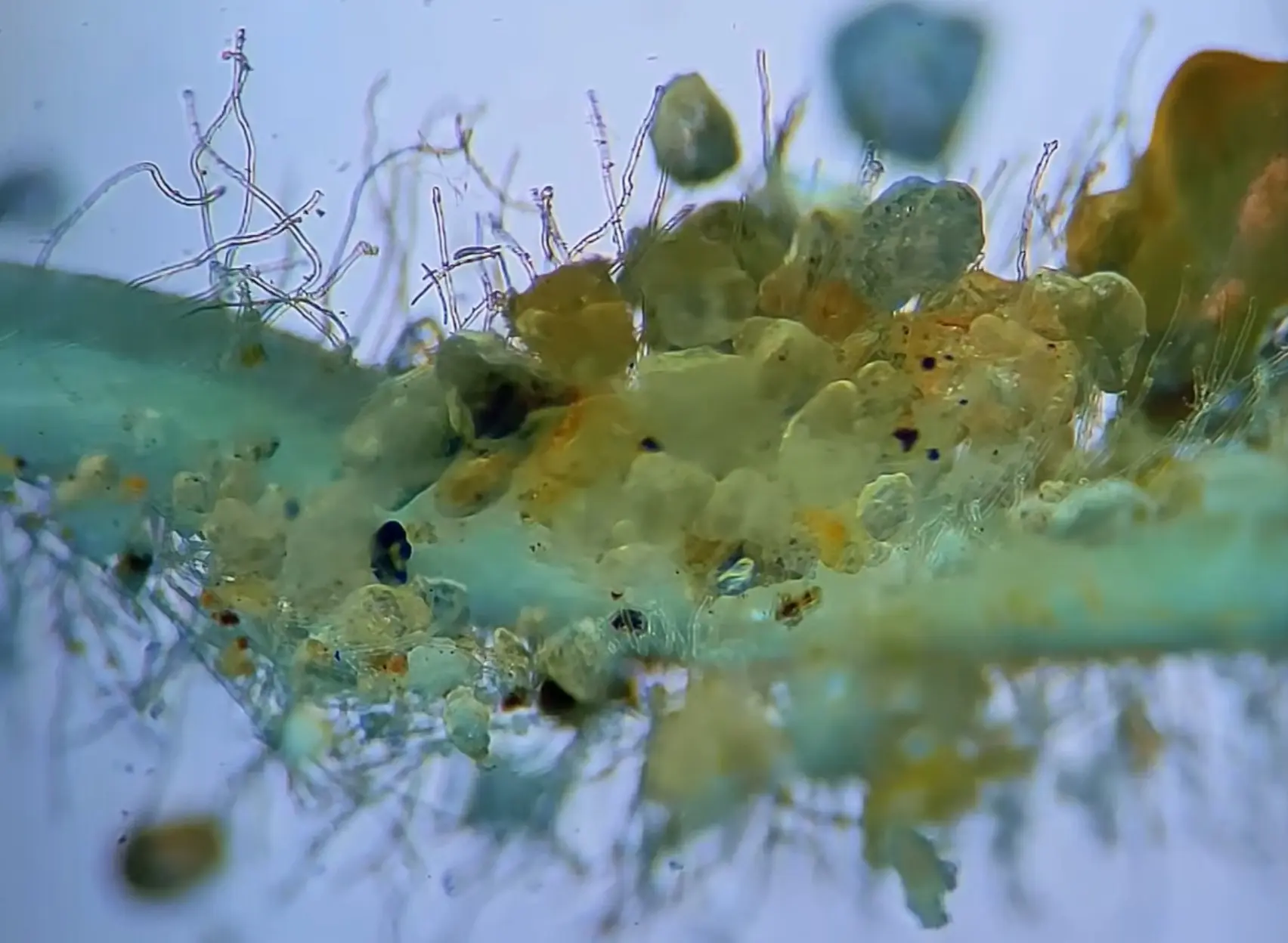
Beads or granules of natural soil and volcanic ash, or of natural volcanic ash. The grains give microbial biofilms surface, and the spaces between them carry water and gases.
Supplies iron. Its iron oxides hold phosphate and release it when the base runs low on oxygen.
Original research, independent experiments, and ecological theory applied to aquariums.
Explore MethodologySymbiotic Litho Ecological Substrate System. It sounds complicated, but it SLESS.
Learn more ShopSubstrate kits, guides, and tools designed around the science.
View shopDuring the early stages of my experience, I maintained several aquariums that followed the conventional model: a 20 gallon long tank for Apistogramma and green fire tetras, and a 10 gallon tall aquarium that housed larger rooted plants alongside burrowing species like zigzag eels and dojo loaches. These systems were biologically rich and productive. Apistogramma bred regularly and plants grew vigorously, but only under strict, sustained management. Despite using commercial "nutrient rich" substrates, I found myself continuously supplementing with fertilizers, feeding schedules, hardware cleaning, and pest control routines to preserve stability.
This dependency revealed a systemic flaw: the ecological balance in these aquariums was externally sustained rather than internally generated. I began seeking a method that could reduce or eliminate such dependencies by fostering an ecosystem capable of self regulation. This transition began with the creation of a nano cube, a small scale aquarium housing shrimp, during a period when financial constraints limited access to commercial aquarium products. Materials such as volcanic ash, laterite clay, and lava rock presented an opportunity to rethink substrate architecture from a biological and mineralogical standpoint.
What emerged was not a conventional planted tank, but a self sustaining, open loop microbial symbiotic nutrient cycle contained within a compact glass enclosure. I later termed this system the Symbiotic Litho Ecological Substrate System (SLESS). Unlike my previous setups, the nano cube required no feeding, no fertilization, no regular water changes, and no hardware maintenance. Its only upkeep was the periodic topping off of evaporated water using distilled water, typically once per month. I was fascinated.
Most notably, the system evolved organically over time. Rather than reactively adjusting variables to control biological outcomes, I observed the aquarium mature and adapt under its own ecological momentum. The distinction was profound: in my earlier systems, change was imposed by human intervention; in SLESS, change occurred through ecological succession. This marked the beginning of a methodology grounded not in technological optimization, but in the harnessing of microbial networks, mineral substrates, and biological synergy to sustain life indefinitely.