Is this article ready? While visible water molds often cause aesthetic panic, true aquatic fungi operate unseen. They act as the foundational engine for nutrient cycling, converting inaccessible waste into usable energy that sustains the entire food web. Without this microscopic architecture, the long-term stability of a semi-closed ecosystem inevitably fails.
The Distraction of the Fuzz
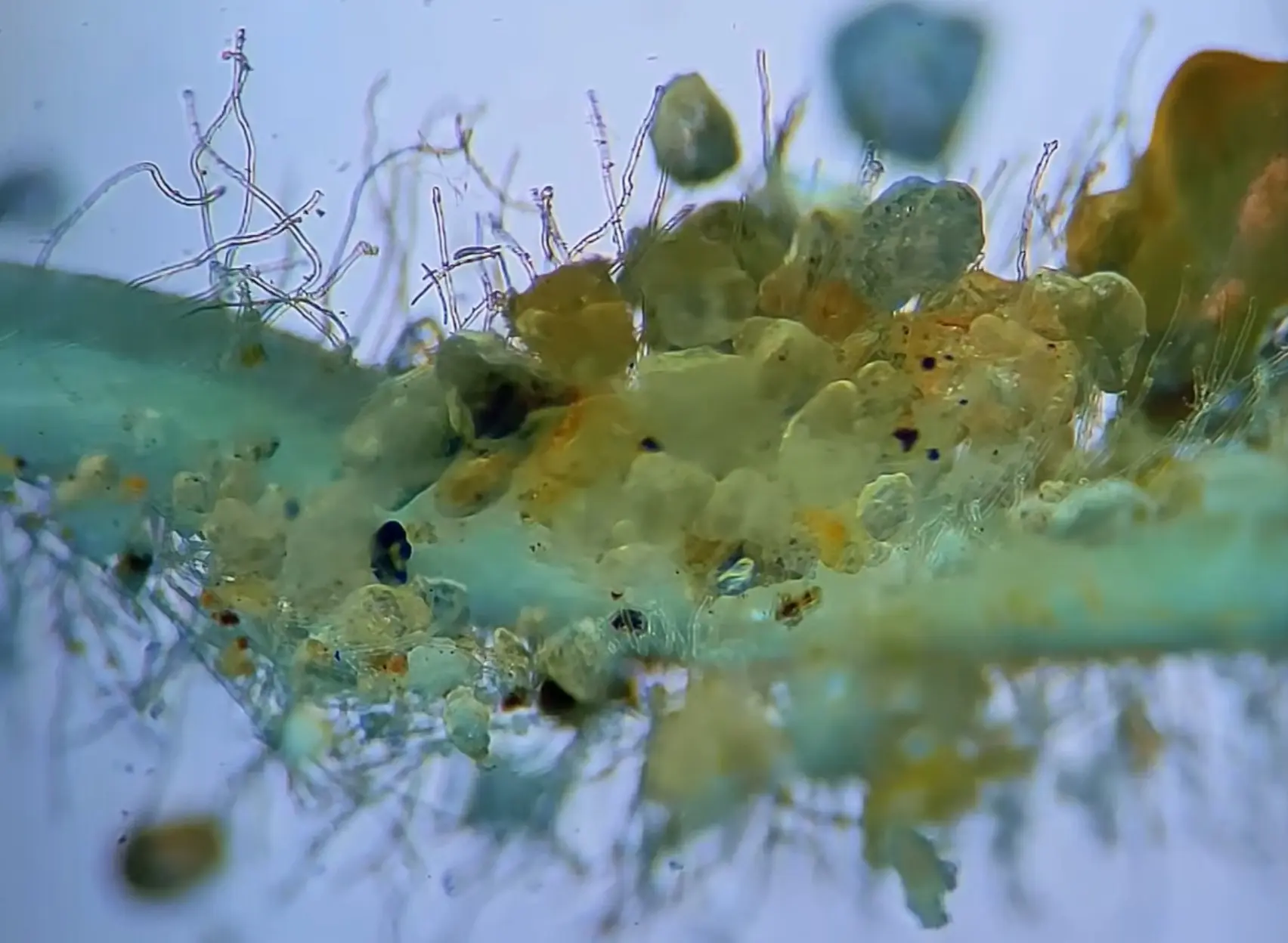 True aquatic fungi operate unseen, deeply integrated into the substrate architecture.
Fungi are arguably the most misunderstood organisms in the aquarium hobby. When an aquarist sees a white, translucent film growing on a newly submerged piece of driftwood, the first reaction is of disgust, self-doubt, and maybe even curiosity, which leads to the discovery of fungi and bacteria (biofilm). But that visible "fuzz"-which you may have just discovered is a mix of fungal growth and biofilm that snails and shrimp love to eat-is barely scratching the surface of aquatic mycology. True aquatic fungi operate unseen. They are deeply integrated into the substrate, acting as the fundamental engine for nutrient cycling and transformation in a freshwater, semi-closed ecosystem. The visible molds are just a distraction (a somewhat small, temporary occurrence created from a complex system in formation) and can easily take you away from the real science happening beneath the surface.
"So, what's the white fuzzy thing again?"
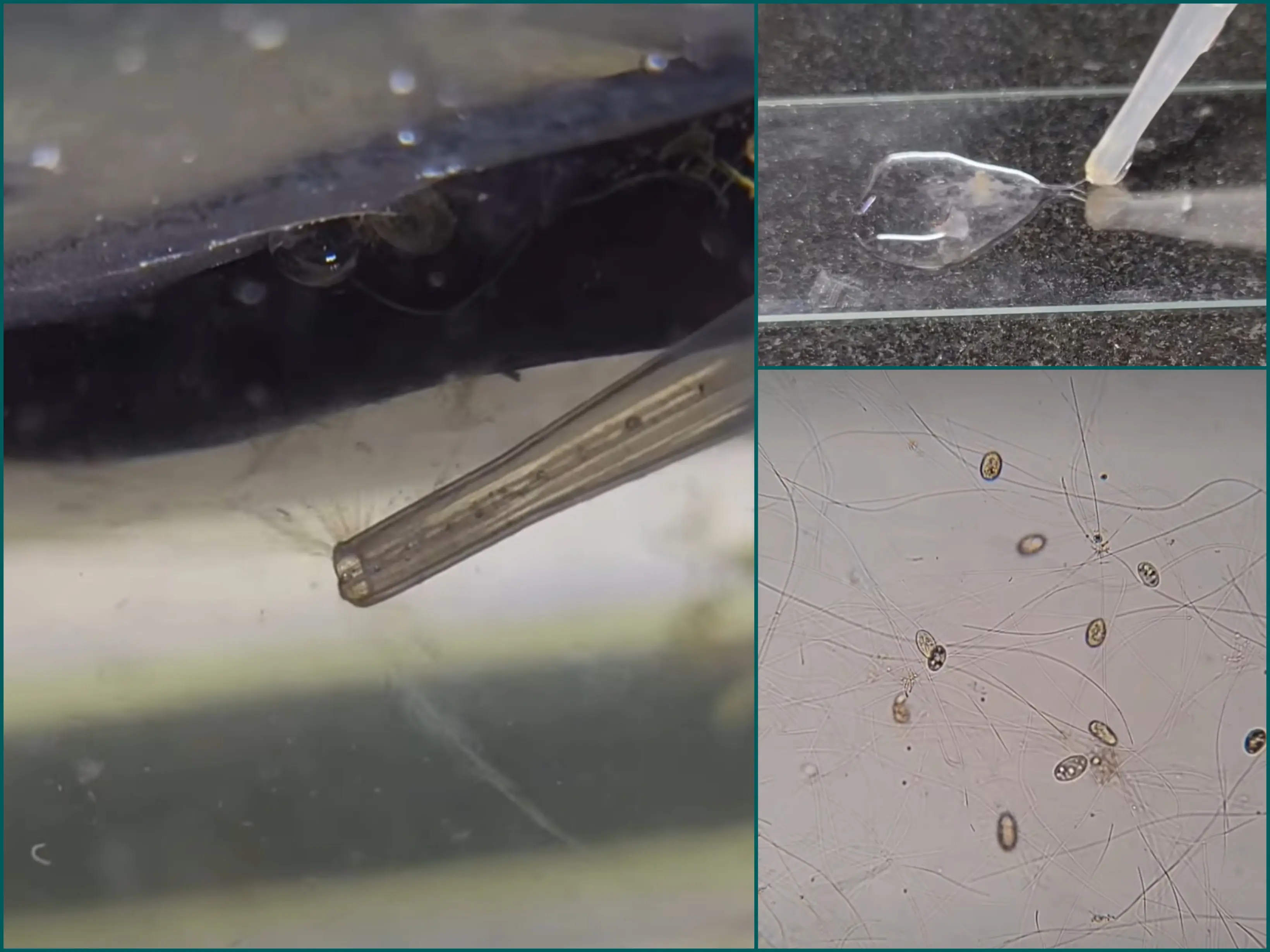 Microscopic view of the opportunisic water molds (Chromista) often mistaken for true aquatic fungi.
What most hobbyists call "fungus" on new wood is usually a mix of bacteria and water molds. These water molds (often called phycomycetes) actually belong to a completely different classification-Chromista (Aquatic Fungi - an overview). They are microorganisms that share fungal characteristics but undergo bi-partitioning due to their natural aquatic environment. These molds are opportunistic. They bloom quickly to consume easily accessible surface sugars from newly introduced wood or botanicals. While they play a temporary role in breaking down organics, they are just the loud, visible phase. The real, sustained work is being done by true freshwater fungi, which are far more complex and much harder to observe.
The reality of "Fungi in Aquariums"
Understanding aquatic fungi should begin to shift the perspective of what an aquarium actually is. It stops being a planted display box and becomes a layered, functioning ecosystem that does not require as much external input as we normally think it needs. Scrubbing off the temporary, visible water molds might satisfy your superficial aesthetic urge, but the long-term stability of the system relies entirely on the invisible fungal networks quietly cycling nutrients deep within the substrate, microorganisms, and plant root systems, whether you want it or not. I have spoken with different college professors, fish store owners, and breeders and have come to the same conclusion: they all agree that fungi dynamics have always been present in the planted tank. We are just not 100% sure of what exact organisms are necessary, in which quantity they are present, or specifically, how it all completely works in semi-closed aquarium systems.
Science has documented roughly 200 species of freshwater fungi (Freshwater Mycology, Chapter 7). Unlike terrestrial mushrooms or surface-level water molds, true aquatic fungi form an incredibly intimate association with the substrates they colonize. This is why so little is known about their ecology in shaping freshwater systems, despite their recognizable importance. They penetrate and access deep bottom layers of the substrate, consuming different types of organic content that provide enough nutrients for their proliferation. Because their hyphae physically weave into the material they are breaking down, they are notoriously difficult to isolate, study, and report on. You cannot just look at a piece of wood and see the network; it is built into the architecture of the wood itself.
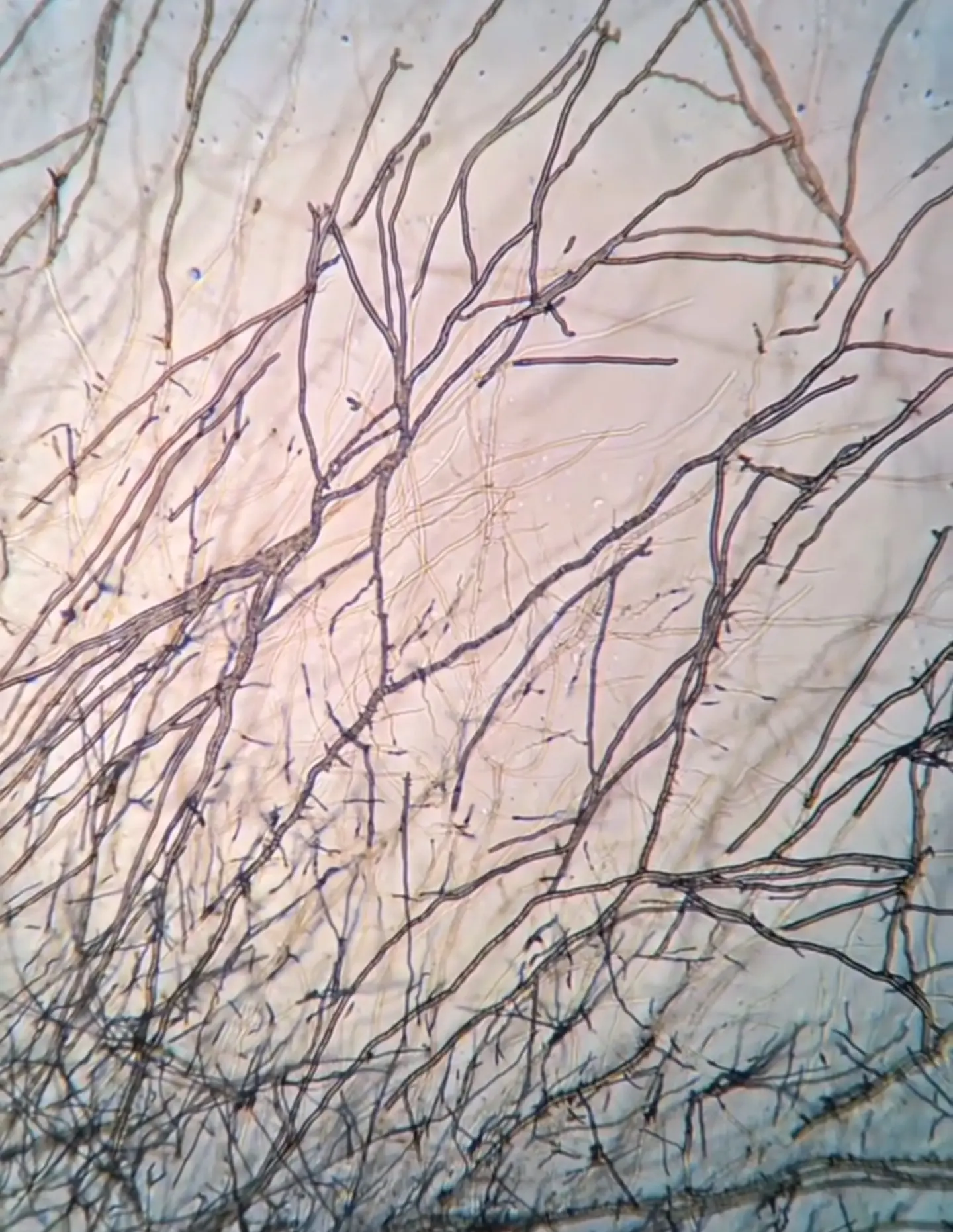
In an aquatic ecosystem, energy gets trapped in plant litter, or dead organic material like wood and leaves. In scientific terms, this is Dead Coarse Particulate Organic Matter, or DCPOM (Freshwater Mycology, Chapter 7). Aquatic fungi are uniquely capable of absorbing the specific, complex molecules locked inside this DCPOM. They secrete enzymes to break down these stubborn materials, using the organic content to proliferate. This mechanism is known as the "Mycoloop" (Freshwater Mycology, Chapter 7). By breaking down the litter, the fungi extract trapped nutrients and repackage them into their own biomass. When microfauna and invertebrates graze on these fungal networks, those nutrients are cycled back up through different trophic levels. The fungi act as the main bridge, converting inaccessible waste into usable energy. Without this foundational layer of nutrient cycling, the overall net that holds the ecosystem together begins to fail.
The Problem: Parasites and Specialists
It is also worth noting that not all aquatic fungi are simple decomposers (saprophytes). Many are highly specialized parasites that dictate population control at a microscopic level (request source, author discrete preference/academic). If you ask me, it sounds more like a tool than a real "problem" when we understand that the "population control" concept is applied, but we still need to be careful. Unfortunately for us trying to better understand this crazy fungal universe (but fortunately for nature), freshwater fungi often display specific preferences, pairing with hosts from the exact same orders. Scientific literature points to complex host-parasite combinations, such as Rozella allomycis infecting Allomyces arbuscula (request source, author discrete preference/academic). However, because these organisms are so difficult to track in the wild, most records of associations between mycoparasites and aquatic fungi are based on single observations, making it difficult to generalize their distributions or even conclude anything (Freshwater Mycology, Chapter 7).
What Now?
Are you sure you understand aquariums well enough to be correcting people on forums and social media? I think we will never be sure until we create our own methods and test them. I have done this exact thing with my SLESS method and SUBEX report. However, I want you to also start your own project with Impossible Aquariums, giving your story and methodology the stage it deserves and the knowledge funnel it needs to improve the aquarium science we all love! The project is called Aquarium Maker (aquariumaker.com) and will be a separate project under the Impossible Aquariums Initiative. Check out the new page and be ready for a new type of hobby platform.
- ScienceDirect: Aquatic Fungi - An Overview
- Freshwater Mycology (2022): Chapter 7 - Mycoloop: Role in shaping aquatic ecosystems.
- Ogwugwa, V. H., Ogwugwa, J., & Bandh, S. A. (Elsevier, pp. 117-133). https://doi.org/10.1016/B978-0-323-91232-7.00010-6
- Fuller & Jaworski (1987): Methods for observing host-parasite combinations in aquatic fungi (cited via Freshwater Mycology).
Consulting References
- Bio2 Professor PowerPoint Presentation from Valencia College. I am not allowed to share the entire document as it is her property and for academic purposes only.
- Fundamentals of Aquatic Ecology (1991): Part 2: Aquatic Ecosystems, Part 3: Aquatic Individuals and Communities.